Ch-4: Introduction to Microbiology and common microorganisms (28 Hrs.)
Syllabus:
- Introduction to Microbiology and common microorganisms (3).
- Epidemiology: Introduction to epidemiology, and its applications. Understanding of terms such as epidemic, pandemic, endemic, mode of transmission, outbreak, quarantine, isolation, incubation period, contact tracing, morbidity, mortality. (2).
- Causative agents, epidemiology and clinical presentations and Role of Pharmacists in educating the public in prevention of the following communicable diseases:
- Respiratory infections – chickenpox, measles, rubella, mumps, influenza (including Avian-Flu, H1N1, SARS, MERS, COVID-19), diphtheria, whooping cough, meningococcal meningitis, acute respiratory infections, tuberculosis, Ebola (7)
- Intestinal infections – poliomyelitis, viral hepatitis, cholera, acute diarrheal diseases, typhoid, amebiasis, worm infestations, food poisoning (7)
- Arthropod-borne infections – dengue, malaria, filariasis and, chikungunya (4)
- Surface infections – trachoma, tetanus, leprosy (2)
- STDs, HIV/AIDS (3)
Introduction to Microbiology and common microorganisms (3).
What is microbiology?
Micro- too small to be seen with the naked eye
Bio- life
Logy- study of
- Microbiology is the study of all living organisms that are too small to be visible with the naked eye. This includes bacteria, archaea, viruses, fungi, prions, protozoa and algae, collectively known as ‘microbes’.
- These microbes play key roles in nutrient cycling, biodegradation, climate change, food spoilage, the cause and control of disease, and biotechnology.
- They can only be seen with the help of microscopes.
- Microorganisms are found everywhere in nature like soil, water, air, plant surface, human beings and animals.
- Size < 0.1 mm.
- Many microorganisms live in our body. They are normally harmless and even helpful, but under certain conditions some microorganism causes disease.
- Father of microbiology is Antony Van Leeuwenhoek and Father of modern microbiology is Louis Pasteur.
Microbiology deals with
- The form, structure, reproduction, physiology, metabolism and classification of the microorganisms.
- The study of their distribution in nature.
- Their relationship with each other and other living organisms.
- Their effects on human beings and on other animals and plants.
- Their abilities to make physical and chemical changes in our environment.
- Their reaction to physical and chemical agents.
What are types of microorganisms?
- Bacteria, Fungi, Actinomycetes, Algae, Protozoa, Nematodes, Helminths and Viruses
- They can be cellular or acellular.
- Cellular- they can be divided as unicellular or multicellular and prokaryotes or eukaryotes
- Acellular refers to biological entities or tissues that lack a cellular structure. Common examples include viruses, prions, and viroids, which cannot reproduce or metabolize independently and require a host cell to function.
Types or branches or scope of microbiology
Basic Microbiology
- Bacteriology
- Mycology
- Algology
- Virology
- Protozoology
- Nematology
Applied microbiology
- Agricultural microbiology
- It is the study of relationships of microorganisms and crops with emphasis on the control of the plant diseases and improvement of yield.
- Aquatic microbiology
- Aquatic microbiology is the study of microorganisms and their activity in the fresh and marine water including lakes, rivers, bays, estuaries and seas.
- It also includes water purification, microbiological examination and biological degradation of waste.
- Air microbiology
- It deals with the role of aerospora in contamination and spoilage of food.
- It also deals with the spreading of plant and animal diseases through air.
- Dairy microbiology
- The study of Microorganisms that are associated with milk and milk products in all aspects is defined as Dairy Microbiology. In milk microorganisms play a vital role in production of many products
- Industrial microbiology
- It is the study of industrially useful microorganisms in the production of alcoholic beverages, vitamins, amino acids, enzymes, antibiotics and other drugs.
- It also includes fermentation techniques for the production of different compounds.
- Food microbiology
- It deals with the interaction of microorganisms and food in the relation to food processing, food spoilage, food borne diseases, their prevention and includes preparation and preservation of food products.
- Medical microbiology
- It deals with the study of causative agents of infectious diseases in human beings.
- Medical microbiology has close links with other disciplines such as pathology, clinical medicine, pharmacology and therapeutics.
- Pharmaceutical microbiology
- It deals with the study of microorganisms which are responsible for the production of antibiotics, enzymes, vaccines, vitamins and other pharmaceuticals substances.
- It also includes the method of sterilization and disinfection, microbiological testing of pharmaceuticals, sterile product preparation and diagnosis of disease and treatment.
- Textile microbiology
- That branch of industrial microbiology concerned with textile materials. Most of the microorganisms on textiles—the fungi, actinomycetes, and bacteria—originate from air, soil, and water. Some of the microorganisms are harmful to either the fibers or the consumer.
- Environmental microbiology
- Environmental microbiology is the study of how microbes interact with the environment and each other, including their effects on the landscape, the spread of viruses and bacteria, the distribution of algae, fungi and parasitical organisms and the associated implications for human health and the environment.
- Exo-microbiology- Astro microbiology (also called exo-microbiology) is the study of microorganisms in space, or under space conditions.
Common Microorganism in microbiology
- Microorganisms are found in each of the three domains of life: Archaea, Bacteria, and Eukarya.
- Microbes within the domains Bacteria and Archaea are all prokaryotes (their cells lack a nucleus), whereas microbes in the domain Eukarya are eukaryotes (their cells have a nucleus).
- Some microorganisms, such as viruses, do not fall within any of the three domains of life
1. Bacteria
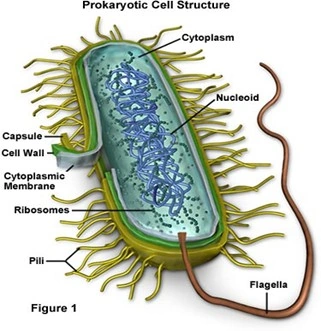
- Bacteria are found in nearly every habitat on earth, including within and on humans.
- Most bacteria are harmless or helpful, but some are pathogens, causing disease in humans and other animals.
- Bacteria are prokaryotic because their genetic material (DNA) is not enclosed within a true nucleus.
- Most bacteria have cell walls that contain peptidoglycan.
- Bacteria are often described in terms of their general shape. Common shapes include spherical (coccus), rod-shaped (bacillus), or curved (spirillum, spirochete, or vibrio).
- Some bacteria are photosynthetic, such as oxygenic cyanobacteria and anoxygenic green sulfur and green non-sulfur bacteria; these bacteria use energy derived from sunlight, and fix carbon dioxide for growth. Other types of bacteria are non-photosynthetic, obtaining their energy from organic or inorganic compounds in their environment.
2. Archaea
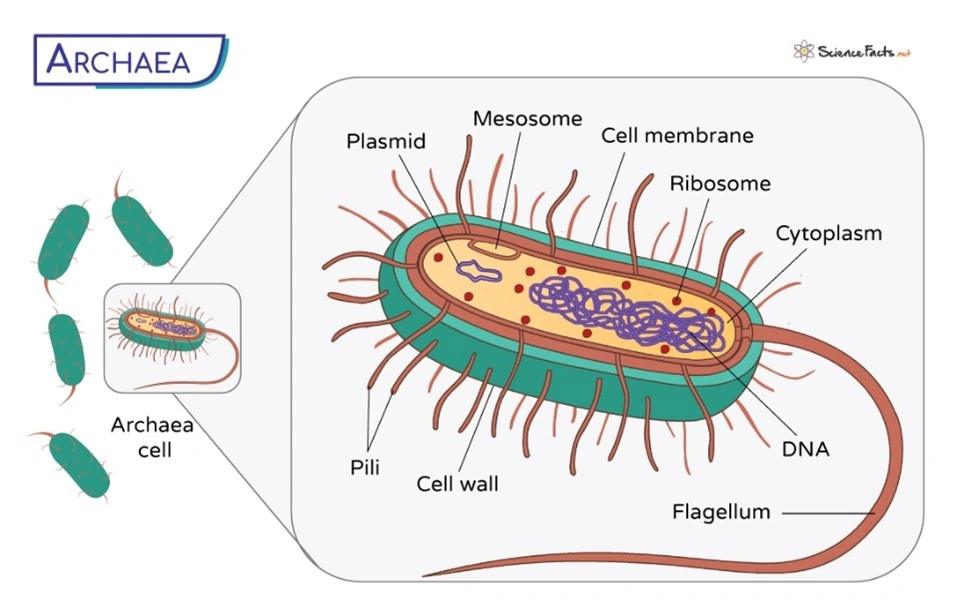
- Archaea are also unicellular prokaryotic organisms.
- Archaea and bacteria have different evolutionary histories, as well as significant differences in genetics, metabolic pathways, and the composition of their cell walls and membranes.
- Unlike most bacteria, archaeal cell walls do not contain peptidoglycan, but their cell walls are often composed of a similar substance called pseudopeptidoglycan.
- Like bacteria, archaea are found in nearly every habitat on earth, even extreme environments that are very cold, very hot, very basic, or very acidic, salty areas (halophiles), hot springs (thermoacidophiles) and marshy areas (methanogens).
- Some archaea live in the human body, but none have been shown to be human pathogens.
3. Eukaryotic Microorganisms
The domain Eukarya contains all eukaryotes, including unicellular or multicellular eukaryotes such as protists, fungi, plants, and animals. The major defining characteristic of eukaryotes is that their cells contain a nucleus.
- Protists- Protists are unicellular eukaryotes that are not plants, animals, or fungi. Example: Algae and protozoa.
- Algae:
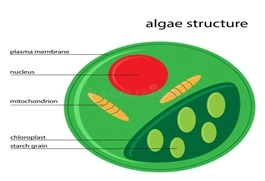
- Algae(singular: alga) are plant-like protists that can be either unicellular or multicellular. Their cells are surrounded by cell walls made of cellulose, a type of carbohydrate.
- Algae are photosynthetic organisms that extract energy from the sun and release oxygen and carbohydrates into their environment because other organisms can use their waste products for energy, algae are important parts of many ecosystems.
- Many consumer products contain ingredients derived from algae, such as carrageenan (red algae) or alginic acid (brown algae), which are found in some brands of ice cream, salad dressing, beverages, lipstick, and toothpaste.
- A derivative of algae- Agar also plays a prominent role in the microbiology laboratory. Agar, a gel derived from numerous algae, mainly of the genus Gracilaria, Gelidium and Eucheuma. All of these algae are characterized by belonging to the group of red algae.
- Agar, can be mixed with various nutrients and used to grow microorganisms in a Petri dish.
- Algae are also being developed as a possible source for biofuels.
- Protozoa:
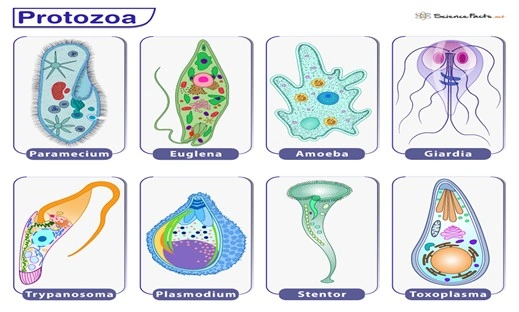
- Protozoa (singular: protozoan) are very diverse. Some protozoa move with help from hair-like structures called cilia or whip-like structures called flagella. Others extend part of their cell membrane and cytoplasm to propel themselves forward. These cytoplasmic extensions are called pseudopods (“false feet”).
- There are four major groups of protozoans.
- Amoeboid protozoans: eg Amoeba, of them such as Entamoeba are parasites.
- Flagellated protozoans: eg- Trypanosoma.
- Ciliated protozoans: eg- Paramoecium.
- Sporozoans: eg- Plasmodium (malarial parasite)
- Algae:
- Fungi

- Fungi(singular: fungus) are also eukaryotes.
- Some multicellular fungi, such as mushrooms, resemble plants, but they are actually quite different.
- Fungi are not photosynthetic, and their cell walls are usually made out of chitin rather than cellulose.
- Candida albicans is a unicellular fungus, or yeast. It is the causative agent of vaginal yeast infections as well as oral thrush, a yeast infection of the mouth that commonly afflicts infants.
- C. albicans have a morphology similar to that of coccus bacteria; however, yeast is a eukaryotic organism (note the nuclei) and is much larger
- Unicellular fungi—yeasts—are included within the study of microbiology. There are more than 1000 known species. Yeasts are found in many different environments, from the deep sea to the human navel.
- Some yeasts have beneficial uses, such as causing bread to rise and beverages to ferment; but yeasts can also cause food to spoil. Some even cause diseases, such as vaginal yeast infections and oral thrush.
- Other fungi of interest to microbiologists are multicellular organisms called molds. Molds are made up of long filaments that form visible colonies. Molds are found in many different environments, from soil to rotting food to dark bathroom corners.
- Molds play a critical role in the decomposition of dead plants and animals.
- Some molds can cause allergies, and others produce disease-causing metabolites called mycotoxins.
- Molds have been used to make pharmaceuticals, including penicillin, which is one of the most commonly prescribed antibiotics, and cyclosporine, used to prevent organ rejection following a transplant.
- Helminths

- Helminths fall under kingdom Animalia
- Multicellular parasitic worms called helminths are not technically microorganisms, as most are large enough to see without a microscope. However, these worms fall within the field of microbiology because diseases caused by helminths involve microscopic eggs and larvae. One example of a helminth is the guinea worm, or Dracunculus medinensis, which causes dizziness, vomiting, diarrhea, and painful ulcers on the legs and feet
- Infection typically occurs after a person drinks water containing water fleas infected by guinea-worm larvae.
- In the mid-1980s, there were an estimated 3.5 million cases of guinea-worm disease, but the disease has been largely eradicated.
- In 2014, there were only 126 cases reported, thanks to the coordinated efforts of the World Health Organization (WHO) and other groups committed to improvements in drinking water sanitation.
- Viruses
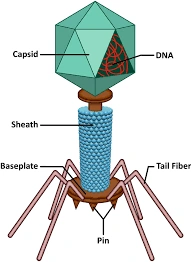
- Virus means venom or poisonous fluid.
- Dmitri Ivanowsky (1892) recognised certain microbes as causal organisms of the mosaic disease of tobacco. These were found to be smaller than bacteria because they passed through bacteria-proof filters. M.W. Beijerinek (1898) demonstrated that the extract of the infected plants of tobacco could cause infection in healthy plants and named the new pathogen “virus”
- Viruses are acellular microorganisms, which means they are not composed of cells. Essentially, a virus consists of proteins and genetic material—either DNA or RNA, but never both
- In general, viruses that infect plants have single stranded RNA and viruses that infect animals have either single or double stranded RNA or double stranded DNA.
- Bacterial viruses or bacteriophages (viruses that infect the bacteria) are usually double stranded DNA viruses.
- The protein coat of virus called capsid made of small subunits called capsomeres, protects the nucleic acid.
- They are inert outside of a host organism. However, by incorporating themselves into a host cell, viruses are able to co-opt the host’s cellular mechanisms to multiply and infect other hosts.
- Viruses can infect all types of cells, from human cells to the cells of other microorganisms.
- In humans, viruses are responsible for numerous diseases, from the common cold to deadly Ebola. However, many viruses do not cause disease.
Bacteria
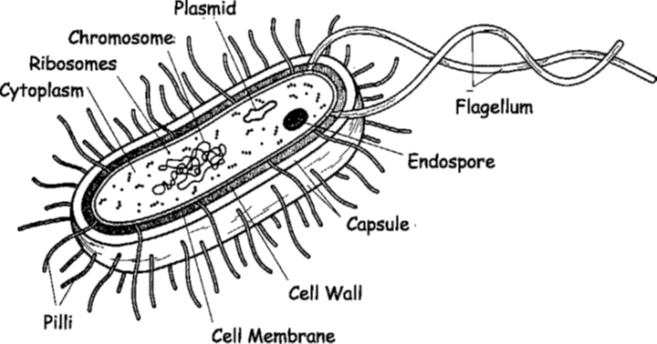
- Bacteria can be gram-positive or gram-negative depending upon the staining methods.
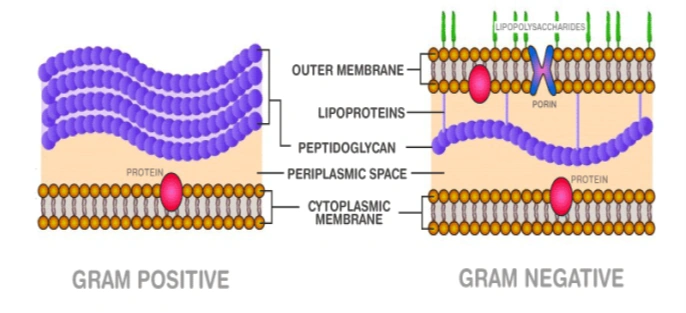
- Cell wall of gram-positive and gram-negative bacteria.
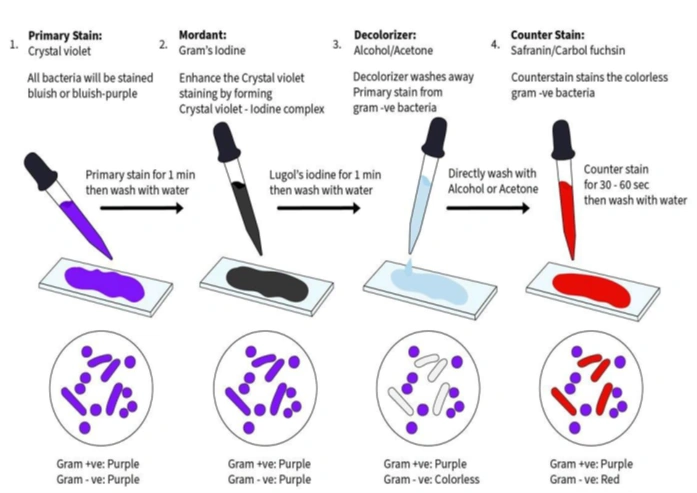
Gram staining
- This technique was proposed by Christian Gram to distinguish the two types of bacteria based on the difference in their cell wall structures.
- The gram-positive bacteria retain the crystal violet colour and stain purple whereas the gram-negative bacteria lose crystal violet and stain red. Thus, the two types of bacteria are distinguished by gram staining.
- Gram-negative bacteria are more resistant to antibodies because their cell wall is impenetrable.
- Difference between Gram positive and Gram negetive bacteria
| Feature | Gram-Positive | Gram-Negative |
| Peptidoglycan Layer | Thick (multi-layered) | Thin (single-layered) |
| Outer Membrane | Absent | Present |
| Gram Stain Color | Purple / Blue | Pink / Red |
| Lipopolysaccharides | Virtually none | High (contains endotoxins) |
| Teichoic Acids | Present in many | Absent |
| Periplasmic Space | Smaller or absent | Large / Distinct |
| Resistance to Physical Disruption | High | Low |
| Antibiotic Susceptibility | More susceptible to Penicillin | More resistant (due to outer membrane) |

EPIDEMIOLOGY
Epidemic-
- The Centers for Disease Control and Prevention (CDC) describe an epidemic as an unexpected increase in the number of disease cases in a specific geographical area.
- Classic Examples: Yellow fever, smallpox, measles, and polio are examples of historical and modern epidemics.
- An epidemic disease doesn’t necessarily have to be contagious (spread via direct contact).
- West Nile fever and the rapid increase in obesity rates are also considered epidemics.
- Epidemics can refer to a disease or other specific health-related behavior (e.g., smoking) with rates that are clearly above the expected occurrence in a community or region.
Epidemiology
Epi = among
Demos = people
Logos = study
- It is defined as the detailed scientific study of frequency, distribution and determinants of disease or disability in society.
- The studies cover sources and modes of transmission of an infection occurring endemically or erupting (exploding) as an epidemic in community.
Disease frequency:
- Disease frequency refers to how often a disease or disability or death and summarizing this information in the form of rates and ratio.
- These rates are required for comparing the frequency in different population.
Distribution of disease:
- This involves the determination of the pattern of the disease distribution in relation to time, place and person.
- Epidemiologists examine whether there has been an increase or decrease of disease over a given period of time, whether the disease is occurring more in women or men.
Determinants of Disease:
- This aspect is concerned with the testing etiological (Etiological refers to the causes or origin of a disease or condition) hypothesis and identifying underlying causes and risk factors of a disease.
- These aspects of epidemiology are known as analytical epidemiology.
Aim of epidemiology
- To describe the distribution and size of the disease in population
- To identify etiological factors in the causation of disease.
- To provide the data required for the planning, implementation and evaluation of health programs.
Objectives of epidemiology
- To reduce incidence and occurrence of disease
- It helps to eradicate/eliminate the disease
- To promote the health and well-being of society
Application of epidemiology
- To study the history of disease and its pattern in the population.
- To search for causes of disease
- To arrive at community diagnosis. This is necessary for initiating preventive and control measures.
- To plan and evaluate health services.
- Evaluations of individual risks
- Search for cause and risk factors
- Identification of disease syndromes
Some terms:
1. Outbreak
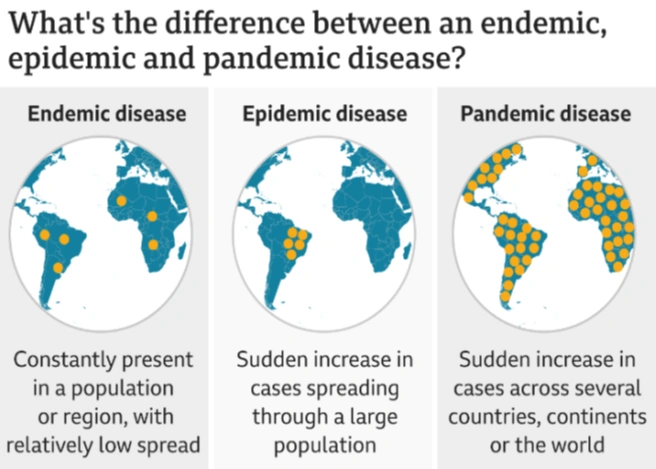
An outbreak is when an illness happens in unexpectedly high numbers. It may stay in one area or extend more widely. An outbreak can last days or years. Sometimes, experts consider a single case of a contagious disease to be an outbreak. This may be true if it’s an unknown disease, if it’s new to a community, or if it’s been absent from a population for a long time.
2. Pandemic
A pandemic is a disease outbreak that spreads across countries or continents. It affects more people and takes more lives than an epidemic. The World Health Organization (WHO) declared COVID-19 to be a pandemic when it became clear that the illness was severe and that it was spreading quickly over a wide area.
3. Endemic
Something is endemic if it is found in a particular geographic area, population or region. An endemic disease is constantly present in a particular area. Malaria, for example, is considered endemic in certain countries and regions.
4. Mode of transmission
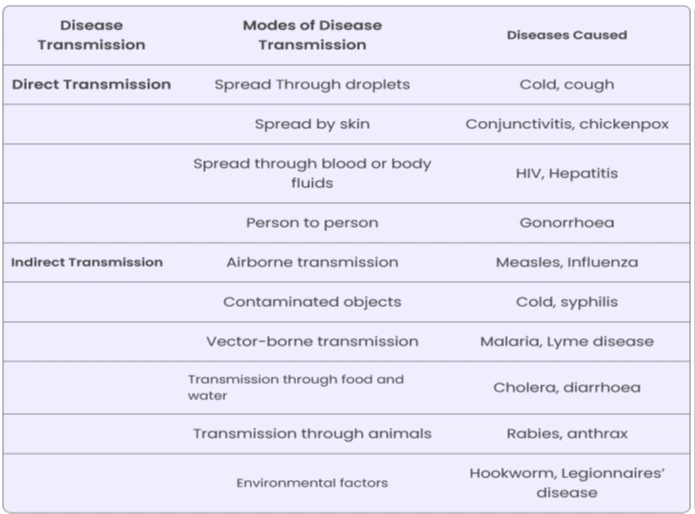
- Transmission is the process by which a pathogen spreads from one host to another.
- Diseases or infections are transmitted in many ways. It may be directly transmitted from one person to another, or by certain bacteria, viruses, protozoa, or fungi.
- There are two different modes of transmission of diseases:
- Direct Transmission– This occurs when the pathogen is transmitted directly from an infected person. For eg., if an open wound comes in contact with the blood of a Hepatitis B infected patient, the wounded person might contract the disease.
- Indirect Transmission- When the pathogens are not transmitted directly from the infected person but through vectors such as flies, mosquitoes, ticks, dogs, etc., it is known as indirect transmission.
5. Quarantine
- The word quarantine comes from quarantena or quarantaine, meaning “forty days”, used in the Venetian language in the 14th and 15th centuries and also in France. The word is designated in the period during which all ships were required to be isolated before passengers and crew could go ashore during the Black Death plague
- A quarantine is a restriction on the movement of people, animals and goods which is intended to prevent the spread of disease or pests.
Or
- A specific period of time in which a person or animal that has a disease, must stay or be kept away from others in order to prevent the spread of the disease:
6. Isolation
Isolation, in medicine, separation of an infected individual (human or animal) from the healthy until that individual is no longer able to transmit the disease.
- Difference between isolation and quarantine
| Isolation | Quarantine |
| Isolation separates sick people with a contagious disease from people who are not sick. | Quarantine separates and restricts the movement of people who were exposed to a contagious disease to see if they become sick. These people may have been exposed to a disease and do not know it, or they may have the disease but do not show symptoms. |
| Isolate if you are sick or have tested positive for COVID-19, even if you don’t have symptoms. | Quarantine and stay away from others when you have been in close contact with someone who has COVID-19. |
7. Incubation period
- The incubation period is the number of days between when you’re infected with something and when you might see symptoms.
- The incubation period ends when the first signs or symptoms of the disease appear.
- Health care professionals and government officials use this number to decide how long people need to stay away from others during an outbreak.
8. Contact tracing
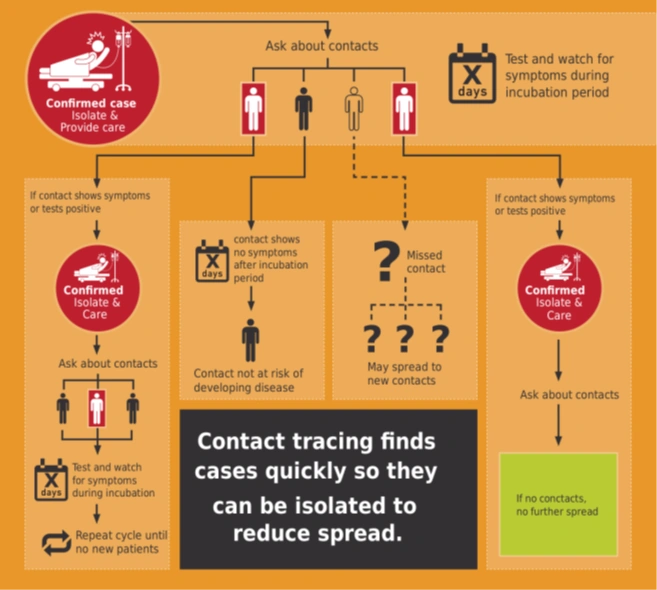
- In public health, contact tracing is the process of identifying persons who may have been exposed to an infected person (“contacts”) and subsequent collection of further data to assess transmission.
- By tracing the contacts of infected individuals, testing them for infection, and isolating or treating the infected, this public health tool aims to reduce infections in the population
The goals of contact tracing include:
- Interrupting ongoing transmission and reduce the spread of an infection
- Alerting contacts to the possibility of infection and offering preventive services or cautionary care
- Offering diagnosis, counseling and treatment to already infected individuals
- If the infection is treatable, helping prevent reinfection of the originally infected patient
- Learning about the epidemiology of a disease in a particular population
- Being a tool in multifaceted prevention strategy to effectively control the spread of an infectious disease.
9. Morbidity
- Definition Morbidity (from Latin morbidus, meaning “sick, unhealthy”) is a diseased state, disability, or poor health due to any cause. The term may be used to refer to the existence of any form of disease, or to the degree that the health condition affects the patient
- Morbidity refers to the state of being diseased or unhealthy within a population
10. Mortality
- Mortality shows the number of deaths in a particular population.
- It is expressed as the number of deaths per 100,000 people per year.
- It is measured with the help of systems such as Simplified Acute Physiology Score (SAPS II and III), APACHE-II, Glasgow, Coma scale, etc.
Causative agents, epidemiology and clinical presentations and Role of Pharmacists in educating the public in prevention of the following communicable diseases:
Disease Definition:
A disease is broadly defined as an abnormal condition that impairs the normal structure or function of all or part of a living organism, typically manifested by specific signs and symptoms.
Unlike a physical injury, which results from immediate external trauma, a disease is often a progressive process caused by internal dysfunctions (like genetic defects) or external factors (like pathogens).
Types of Diseases:
- Communicable (Infectious): A communicable disease is any disease that passes between people or animals. People sometimes refer to communicable diseases as “infectious” or “transmissible” diseases.
- Non-Communicable (Non-infectious): Not spread through contact; typically caused by lifestyle, environment, or genetics (e.g., diabetes, heart disease).
Core Components of Disease
- Signs vs. Symptoms: A sign is objective evidence observed by a doctor (e.g., fever, rash), while a symptom is a subjective experience reported by the patient (e.g., pain, nausea).
- Pathology: The scientific study of the nature, causes, and development of diseases.
- Etiology: The specific cause or origin of a disease (e.g., a particular virus or a genetic mutation)
Classification of disease
Based on causative agent: –
- Bacterial diseases – Diphtheria, tetanus, typhoid, TB, cholera, etc.
- Viral diseases – Mumps, measles, polio, small pox, chicken pox, rabies, etc.
- Protozoan diseases – Malaria, amoebiasis, kala-azar, sleeping sickness, etc.
- Helminthes disease – Taeniasis, ascariasis, filariasis, trichinosis, liver rot, etc.
- Rickettsia diseases – Typhus fever, trench fever, Q-fever, Rocky Mountain spotted fever, etc.
- Spirochetal diseases – Syphilis.
Based on Transmission mode :-
- Contagious Diseases – The healthy person gets infected by physical contact with an infected person. Ex. Measles, chicken pox, small pox, STDs, leprosy, etc.
- Non-Contagious Diseases – The healthy person gets infected on coming in contact with infected food, water, air, etc. Ex. Cholera, typhoid, TB, etc.
- Sometime the microbes gets injected into the body of human being by vector host or carrier such as mosquitoes, rats, etc. Ex. Malaria, dengue, plague, etc.
Respiratory infections
1. Chicken pox
Causative organism
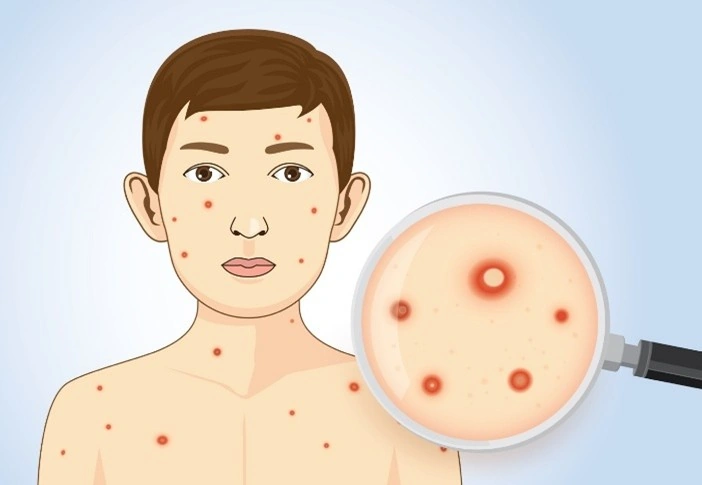
- Varicella (chickenpox) is an acute infectious disease.
- It is caused by varicella-zoster virus (VZV), which is a DNA virus that is a member of the herpesvirus group.
- Chickenpox is usually acquired by the inhalation of airborne respiratory droplets from an infected host.
Epidemiology
- Occurrence- both as endemic and epidemic
- Reservoir – human
- Agent – varicella zoster
- Age- children below the age of 10 year
- Incubation period- 14-16 days
- Transmission
- Person to person
- Respiratory tract secretions (sneezing and coughing)
- Direct contact with lesions
- Temporal Pattern
- In temperate areas-distinct seasonal fluctuation
- with the highest incidence occurring in winter and early spring.
- In the United States, incidence is highest between March and May
- lowest between September and November.
- Herpes zoster has no seasonal variation and occurs throughout the year.
Clinical presentations
- The indication is more severe in adults, immunocompromised and pregnant women.
- The disease began with vesicular eruption often on mucosal surface then spread on centripetal distribution (denser on trunk and sparse on extremities)
- New lesions occur every 2-4 days and with each crop fever is associated.
- The rash progress from small pink macules to vesicles to pastules within 24 hours. (all stages of evolution appeared at the same time)
- Adults, pregnant and immunocompromised at an increased incidence of visceral complications like pneumonitis. Hepatitis and encephalitis.
- Signs of chickenpox usually happen in the following order:
- Fever
- Feeling tired.
- Headache.
- A stomachache that lasts for one or two days.
- A skin rash that is very itchy and looks like many small blisters.
- Bumps filled with a liquid that looks like milky water.
- Scabs after the blisters break.
- Skin that looks reddened.
- Spots that fade away.
Role of pharmacist
- Instruct the infected person to isolate for a week.
- Patient isolate until all lesions crusted over and dry.
- Used gloves.
- Instruct the family to disinfect the articles contaminated by nasal and throat discharges.
- Give Varicella zoster vaccine within 72 hours of exposure for prevention.
2. Measles
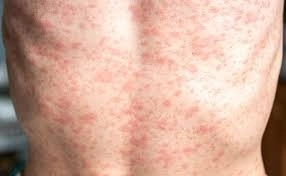
- It also called as rubeola or morbilli, or red measles
- It’s acute highly infectious viral disease.
- Characterized by fever and small red spots on entire body.
- Measles is highly contagious.
- 90 % of healthy individuals who not been immunized against this disease get infected via sharing space, cloths, dish, etc.
- It mainly occurs in infants and children.
- Common and often fatal in developing countries
Causative agents-
- RNA Paramyxo virus.
- It is a single-stranded, enveloped RNA virus
- It is classified as a member of the genus Morbillivirus in the Paramyxoviridae family.
Epidemiology
- Occurrence- it occur throughout the world
- Reservoir- human, there is no known animal reservoir, and an asymptomatic carrier state has not been documented.
- Source of Infection: A case of measles.
- Temporal pattern: peak in winter-spring
- Age: It occurs in children because of passive immunity by maternal by antibody.
- Nutrition: In malnourished children measles can be very severe and it present long period. Severe measles leads to weight loss and more hazardous into malnourish children.
- Incubation Periods: 10 – 14 days.
- Mode of Transmission (respiratory airborne):
- Secretion from nose, throat, and respiratory tract are main sources of infection.
- Virus transmitted by droplet infection, or droplet nuclei or both.
- Aerosolized droplet nuclei has been documented in closed areas (eg- office, examination room) for up to 2 hours after a person with measles occupied the area.
Clinical Presentations:
- Rapidly high fever
- Sneezing and nasal discharge
- Rashes on skin and later phase Koplik’s spots in mucous membrane of buccal cavity.
- It spread on face, neck and then cover whole body.
- Symptoms: High fever, sneezing, nasal discharge, red eyes, photophobia and weight loss.
Role of pharmacist
- Prevent by active immunization.
- After rashes appear patients should isolate for week.
- Promote immunization.
- Recommends for the routine childhood vaccination started from 12 to 15 months of age first dose and second dose at the age of 4 to 6 years of age.
- Immunization of healthy person who is in contact with the infected person within 48 days of exposure.
3. Rubella (German measles or three-day measles)
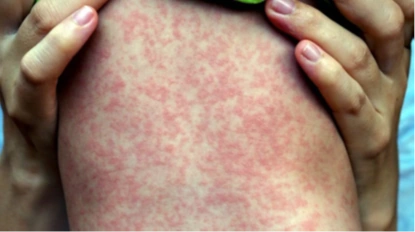
- Rubella virus (RV) is the causative agent of the disease popularly known as German measles.
- It is also known as distinctive red rash.
- It’s highly infectious virus.
Causative Agent:
- Rubella virus.
Epidemiology
- Source of Infection: Virus of Togaviridae virus family causes measles and spread via direct contact and through air.
- Nutrition- Death occurring due to deficiency of vit.A of people suffering from measles.
- Incubation Period: 10 -12 days.
- Mode of Transmission
- Rubella virus is highly contagious and spread through close contact with infected or through air via droplets.
- It also transmitted from a pregnant woman to fetus.
Clinical Presentations
- Sign and symptoms generally appear between 2-3 weeks after exposure.
- Symptoms- Fever, runny nose, headache, inflamed and red eyes, pink rashes on skin and joint pain.
Role of Pharmacist
- MMR (measles-mumps-rubella) Vaccine is present for rubella.
- It’s given to children between 12-15 months of age.
- Educate, promote and provide vaccination
- help develop institutional screening programs to check immunization status
- Pharmacists should stay updated about current cases and symptoms
- Guide people regarding appropriate hand hygiene and general illness management
- Provide education regarding complications
4. Mumps

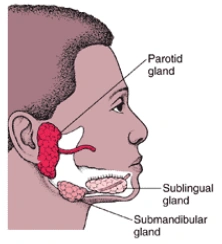
- It is a viral infection it mainly occurs in salivary glands present near ears.
- It causes swelling of one or both of these salivary (parotid) glands.
- Hearing loss is serious complication in mumps.
- There is not any specific treatment available.
Causative Agent:
- Paramyxo viruses, a member of the Rubeola virus family.
Epidemiology
- Source of Infection: Patient suffering from mumps (clinical) and sub- clinical.
- Age and Sex: Common in age group 5-9 years and affects both the sexes.
- Incubation Period: 2-3 weeks.
- Mode of Transmission: Mumps spread through direct contact with saliva or respiratory droplets from the mouth, nose, coughing, talking, sharing items such as water bottles, cups and participating in close- contact activities.
Clinical presentation
- Mumps is characterized by puffy cheeks and tender, swollen jaw. Symptoms of mumps observed in 16-18 days of infection.
- Sign and Symptoms: Fever, headache, swollen jaw, muscle aches, tiredness and loss of appetite.
Role of pharmacist
- Vaccination: MMR vaccine (measles-mumps-rubella)
- Educate, promote and provide vaccinations.
- Guide people regarding appropriate hand hygiene and general illness management.
- Pharmacist should stay updated about current cases of mumps and sign and symptoms.
- Recommended for isolation for appropriate durations (10 days).
- Provide education regarding complications.
5. Influenza (including Avian-Flu, H1N1, SARS, MERS, COVID-19)
- It is an infectious disease.
- Generally referred to as flu.
- Influenza is characterized by fever, pain and general weakness.
Causative Agent:
- It is caused by RNA virus belonging to Orthomyxoviridae family.
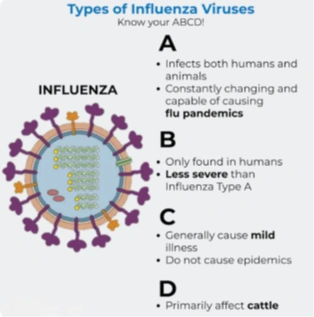
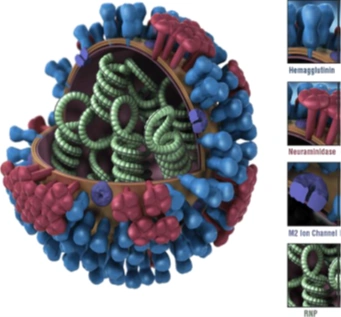
- This is a picture of an influenza (flu) A virus. Influenza A viruses are classified by subtypes based on the properties of their hemagglutinin (H or HA) and neuraminidase (N or NA) surface proteins. There are 18 different HA subtypes and 11 different NA subtypes. Subtypes are named by combining the H and N numbers – e.g., A(H1N1), A(H3N2).
Epidemiology
- Source of Infection: Cases (clinical), sub-clinical cases.
- Age and Sex: All ages and both sees are vulnerable.
- Period of Infectivity: Spread the infections to others up to 7 days from the beginning of the disease.
- Incubation Period: 18-72 hours.
- Mode of Transmission: The infection spread via droplets infection or droplets nuclei, sneezing, coughing or talking. Viruses enter via respiratory tract.
- Influenza is a highly infectious viral disease that can occur as a pandemic, epidemic, outbreak and in form of sporadic cases.
- A majority of human infections are caused by either type A or B influenza viruses. Type A has been associated with widespread epidemics and pandemics, while type B has been infrequently implicated in regional epidemics. Influenza type C infections cause only a mild respiratory illness.
- In temperate climates seasonal epidemics of the virus occur mainly during the wintertime, compared to tropical regions where it may occur throughout the year, resulting in much more irregular outbreaks. The epidemics caused by the influenza virus are estimated to result in about 3 to 5 million cases of severe illness, and up to 500 thousand deaths worldwide.
Clinical presentation
- Respiratory tract is firstly affected by the attack of influenza virus and leads to disease or infection.
- Sign and Symptoms: Fever, headache, cough, sneezing, soreness of throat, body ache, vomiting, diarrhea and lethargy.
Role of Pharmacist
- Pharmacist should recommend for vaccines.
- Drugs to prevent the transmission of influenza virus are live attenuated vaccine, split virus vaccine, recombinant vaccine.
- A prophylactic drugs such as Amantadine.
5.1 Avian flu (Bird flu)
- The disease occurs due to infection with avian (bird) influenza (flu) Type –A viruses is termed as avian influenza.
- Viruses occur naturally among wild aquatic birds.
- Bird flu viruses do not normally infect humans. However, sporadic (occasionally) human infections with bird flu viruses have occurred
Causative Agent:
- Influenza virus Type-A
Epidemiology
- Source of Infection: Bird flu occurs naturally in wild water flow and spread into domestic poultry like chickens, ducks, geese. It spread through contact with an infected birds faces or secretions from its nose, mouth or eyes.
- Incubation Period: 2 – 17 days.
- Infective Period: 3-5 days.
- Mode of Transmission: Bird flu spreads by close contact with dead or alive infected bird. It includes touching infected birds, dropping or bedding and killing or preparing infected poultry for cooking.
Clinical presentation
- Extremely high temperature, feeling hot, shivery, muscle pain, headache, and cough.
- Signs and Symptoms: The early symptoms include diarrhea, sickness, stomach pain, chest pain, bleeding of nose, gums and conjunctivitis.
Role of pharmacist
- FDA approved a vaccine and Limited protection.
- Recommendations for Travelers
- Avoid Domesticated Birds- People should avoid rural areas, small farms and open-air markets.
- Wash Hands- Washed hands with alcohol (60%) based sensitizer while travelling.
- Ask about Flu Shot- Flu shot before travelling it reduce risk infection.
- Poultry and Eggs Products
- Cook Thoroughly: Heat before eating and cooked until juice run clear (74oC).
- Avoid Cross-Contamination: Hot water should be used for washing, cutting.
- Steer Clear of Raw Eggs: Eggshells washed and undercooked eggs avoided.
5.2 H1N1 (Swine flu)
- It is a viral infection which infects pigs.
- It’s quite rare in humans.
- During the 2009-10 flu season, a new H1N1 virus began causing illness in humans. It was often called swine flu and was a new combination of influenza viruses that infect pigs, birds and humans
Causative Agent:
- Influenza A viruses of Orthomyxoviridae family.
Epidemiology
- Source of Infection: H1N1 infects the cells lining of nose, throat and lungs in human body. Enters through inhalation of contaminated droplets.
- Incubation period 1 – 4 days.
- Contagious Period: 5-7 days after symptoms develop.
- Nutrition: Sufficient amount of vitamin C should be taken to keep away H1N1. Citric fruits, spinach, etc. should take.
- Host factor
- Occur in every age group
- Population does not have immunity to viruses
- Complication higher in people with- Asthma, cardiac disease, renal disease and pregnancy.
- Low temperature and low humidity favor aerosol transmission, explaining the seasonal nature of influenza in temperate climate.
- In tropical climates influenza infections are associated with increased rainfall.
- Mode of Transmission: H1N1 virus spread through pigs and due to closed contact from object.
Clinical Presentation:
- In severe case it leads to respiratory failure and death.
- Sign and Symptoms: Body aches, cough, chills, headache, fever, sore throat, tiredness, vomiting and diarrhoea.
Role of Pharmacist
- Should use mask while coughing and sneezing.
- Should wash their hands with soap and water.
- People avoid touching their nose, mouth and avoid spreading germs.
- Avoid contact with sick people.
- Self-Isolate the infected people.
- By using disinfectants, regulating temperature, preventing the transfer of swine flu to human beings and also prevent from human-to-human transmission.
5.3 SARS (Severe Acute Respiratory Syndrome)
Causative Agent:
- Corona virus.
Epidemiology:
- The SARS-CoV strain emerged in November of 2002 in Guangdong Province, China. The strain causes the disease severe acute respiratory syndrome (SARS)
- It is new strain of coronavirus and genetic structure is different from previous corona virus.
- It’s serious disease which affects your ability to breath.
- The World Health Organization (WHO) named this atypical pneumonia ‘Severe Acute Respiratory Syndrome (SARS)’ because of its severity
- Source of infection SARS virus gets transmitted through respiratory droplets produced when an infected person coughs or sneezes.
- Incubation Period: 2 – 7 days and it may extend up to 14 days.
- Mode of Transmission:
- Uninfected individuals can get infected by:
- Deposition of Respiratory Droplets :- Droplets released by infected individual after a cough or sneeze get transmitted by air and deposit on mucous membranes of mouth, nose or eyes.
- Surface Contact: Healthy person get infected on coming contact with surfaces or objects contaminated with infected droplets.
- SARS are transmitted by person-person contact, person living with infected person or taking care with infected one.
- Uninfected individuals can get infected by:
Clinical Presentation:
- Initial Symptoms: – Cough, difficulty in breathing, fever (38oC), etc.
- Common Symptoms: – Chill, cough, fever, headache, muscle pain.
- Less Common Symptoms: – Cough with phlegm, diarrhoea, sore throat, nausea, vomiting, runny nose, etc.
Role of Pharmacist
- Isolate patients in hospitals and community.
- Provide protection to the medical and paramedical staff while handling patients.
- Provide timely report and accurately.
- Maintain proper hygienic conditions.
- Washing the hands and using mask.
5.4 MERS (Middle East Respiratory Syndrome)
- It affects the respiratory system, severe symptoms may causes death.
Causative Agent:
- MERS is a strain of corona virus known as MERS-CoV.
Epidemiology
- Source of infection – MERS-CoV is zoonotic virus that transmit from animals to humans.
- Age: 50-59 age groups having highest risk of infections. 30-39 years of age group mostly risk for infection.
- Infective Periods: Contagious period is not known but is actively present in the body.
- Incubation Period: 2-14 days.
- Mode of Transmission: MERS-CoV spreads from infected person coughing and close contact with infected person.
Clinical presentation
- MERS does not produce any symptoms in some cases.
- Sign and Symptoms: Fever, coughing, difficulty in breathing, fever, diarrhoea, sore throat, nausea, vomiting, runny nose, blood in cough, etc.
Role of Pharmacist
- Hands should be washed with sanitizer, and soap.
- Proper respiratory hygiene measures.
- Nose, eyes, mouth should not be touched without washing.
- Surface and objects should be cleaned with disinfected.
- Prevention Human-to-Human Transmission: –
- Used masks, gloves, eye protection, long sleeved gown while handling infected persons.
- Isolate the patients.
5.5 COVID-19
- It is caused by novel coronavirus, now called Severe acute respiratory syndrome coronavirus 2.
- It is highly contagious and spread direct contact with droplets, or infected person.
Causative Agent:
- Severe acute respiratory syndrome coronavirus 2 (SARS-CoV-2).
Epidemiology
- Source of infection: Spread by droplets of discharge or saliva, cough and sneezing.
- Age and Sex: Older and underlying medical problem are at more risk of developing serious illness.
- Period of infectivity- The duration for which a patient with COVID-19 remains infective is unclear.
- Incubation Period: 1-14 days.
- Mode of Transmission: Covid-19 virus spread by direct contact with respiratory droplets of infected person, by touching contaminated surface.
Clinical presentation
- Covid-19 affects different people in different ways. Usually, people with mild to moderate illness can recover at home.
- Sign and Symptoms: Fever, dry cough, tiredness, pain, sore throat, loss of smell and taste, headache, rash on skin, diarrhoea.
- Serious Symptoms: Difficulty in breathing, chest pain and loss of speech or movement.
Role of pharmacist
- Wear a mask.
- Stay 6 feet away from others.
- Get vaccine.
- Wash hands.
- Avoid crowds and poorly ventilated spaces.
- Promote Maintain Cleanliness and disinfectants usage.